 BACK TO NEWS

“انت عشت الحرب، انا عم عيش نتائجها”
— «بياع منام»
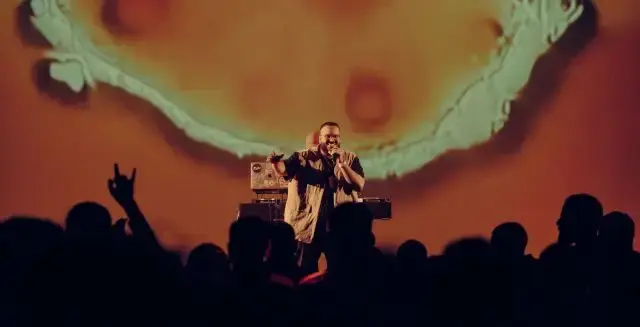
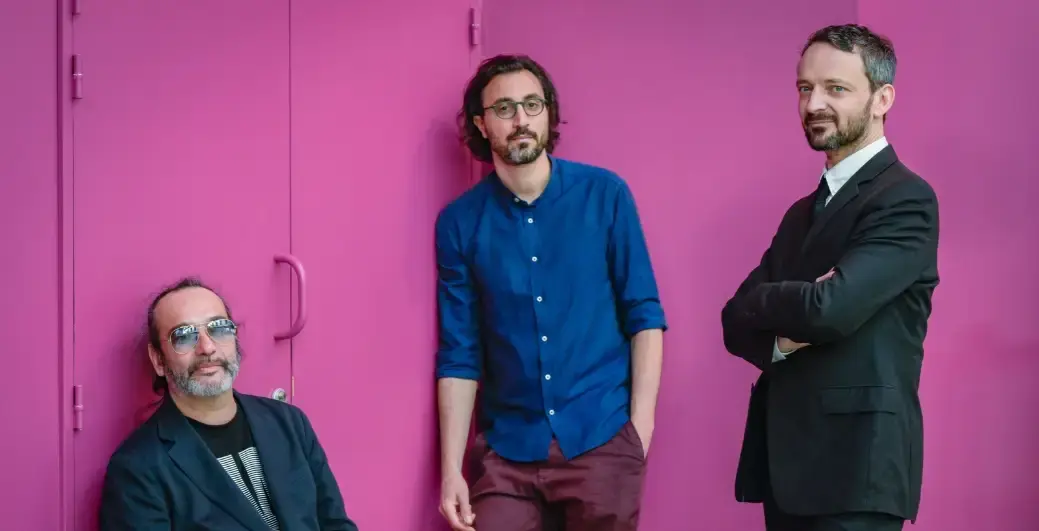
In his 2003 solo debut, 3am Behkeh Bil Sokout, Rayess Bek (Wael Koudaih) gave voice to the generation growing up in the aftermath of Lebanon’s civil war. Having started his rap career as one half of the Lebanese duo Aks’ser, alongside Eben Foulen, he carried that political awareness into his solo work, addressing unemployment, political disillusionment, and the weight of a conflict inherited from an older generation.
The album’s title, “I’m speaking in silence,” also describes the conditions those songs were made under. With Aks’ser, tracks like «بيتزا» and «صفّيت بعكس السير» relied on satire and indirect messaging to get past censorship. Rayess Bek identifies three forms of it: state censorship, social censorship, and the one he considers hardest to overcome, self-censorship.
“There are several kinds of censorship, and wherever you are, they shape your artistic approach, because a censor is a limit, and a limit pushes you to get around it or cross it. My motto is that a limit is made to be crossed.”
For him, those limits did more than hold the group back.
“All of these forms of censorship shape our artistic work. So no, it didn’t simply restrict what we could say. It shaped how we said it.”
Many of the problems he rapped about then are still here. In «بياع منام», he raps «من الماضي ومن الحاضر فينا نفهم المستقبل», and it would be easy to frame those songs as warnings of what Lebanon would eventually become. But Rayess Bek draws a different perspective.
“I wasn’t predicting that things would get worse. Twenty-five years ago I was pointing at the problems of that time, and those problems are the same today, only amplified. A problem that isn’t solved doesn’t go away. It sinks in and it grows.”
Naming those problems, then or now, is the same act for him.
“It’s not a question of having been right. It’s part of my artistic work: asking what’s wrong, what’s disturbing, and reflecting on society and what is at stake in it. That line from «بياع منام» says it well: we understand the future through the past and the present, and when the past is left unresolved, the present repeats it.”
In «لبنان حلم», he raps:
“مش رح أقدر ربّي العالم حتى مع هالمايكروفون”
Even in a song driven by anger and frustration, he acknowledges the limits of what his music can change. The microphone gave him a medium for a message, but it didn’t give him the power to actually fix what he was speaking about.
When asked why he continues to return to Lebanon and its history in his work, his answer reveals the depth of the relationship.
“It isn’t really a choice. Like many Lebanese people, and many Palestinians, I carry a wound. My mother is of Palestinian origin, so there is the burden I inherited from my family, and there is the burden of what I lived myself. I carry both. I need to think about it every day. I need to work on it every day, to weigh the pros and cons, to understand how to live with this wound. In that sense my work is a form of therapy: it’s how I get through each day carrying the Nakba of 1948, the civil war of 1975, the war of 2006, the port explosion of 2020, and everything else.”
Living abroad has not loosened that hold.
“With my sensitivity, I can’t turn the page and tell myself that I now live in Europe, that I can find a job and move on. I’m constantly asking how and why, and above all, what can I bring? That’s why I rap «مش رح أقدر ربّي العالم حتى مع هالمايكروفون». I know I don’t have an incredible impact. But I want to offer my small grain of sand, to the public, and to my family, and especially to my child. I want them to understand where they come from. In the end, that’s more or less what all my work comes down to.”
That wish to pass something on runs through Goodbye Schlöndorff. In it, Rayess Bek combined cassette recordings exchanged between his family members in Lebanon and France during the civil war with footage from Circle of Deceit (1981), a film by German director Volker Schlöndorff set during the Lebanese conflict. Set against a foreign director’s version of the war, the family tapes offer an intimate counterpoint to how it was filmed and reported.
Projects like this took him away from hip-hop, but not from writing.
“I never stopped writing. My writing has changed, though. It’s no longer song lyrics,” he says. “I write a show, I write a performance, I write a way of reflecting on something, and I write things that push the audience to think.”
“It’s no longer hip-hop, which I stopped about fifteen years ago. But for me it’s the same mechanism.”
With visual artist Randa Mirza, he developed Love and Revenge, an audiovisual project that reworks songs and images from older Arab music and cinema.
When asked why some musicians remain celebrated while others disappear, Rayess Bek doesn’t place the responsibility purely on the listeners.
“For me, the problem lies elsewhere: it lies in archiving. We can’t expect a population that is constantly changing to keep a living memory and to constantly remember everything that happened fifty or sixty years ago, or every artist who came through. The problem in the Arab world is that we lack a real archive, one that puts artists back in their rightful place. So they slip into oblivion.”
Some names do resurface, but for reasons he doesn’t trust.
“Some artists do come back. If a label thinks an artist can still make a little money, it will reissue them and people will remember. But that is a commercial logic, a market logic, and we can’t expect commercial logic to keep our memory alive. For that, you need real archiving work. You need museums, and you need a state that takes care of its country’s heritage. Since that isn’t the case, we remember the big names, and the others, who did marvellous work, are forgotten.”
It is a gap he has tried to fill himself.
“That is also what Love and Revenge was about: bringing forgotten names back, such as Saudi female singers and Yemeni singers. That is part of my work.”
There is also room in his work for traditions that haven’t been forgotten at all, but have become so familiar that people rarely stop to think about them, such as dabke.
In Chayyel, his collaboration with Joan Baz, recordings of dabke music are taken apart and reworked electronically. The same happens on screen, where the image of a dancer breaks into fragments, with movements repeated and distorted.
Rayess Bek is interested in what happens when something familiar is presented in an unfamiliar way.
“From time to time I let the audience hear the original archive, and then I deconstruct it,” he explains. “It’s the same with the video: you see a dabke dancer, and then he is deconstructed.”
The point, for him, is less the spectacle than what audiences take away from it.
“What I find important to point out is that dabke is part of our Arab and plural identity, and we tend to forget that. For us, it’s just a moment of celebration at a wedding. But it’s much more than that. It’s truly a part of our identity.”
Across these different forms, Rayess Bek sees a common purpose.
“The main thread is to celebrate Arab culture and bring it back into the present, to give it a place in its own contemporary time,” he says. “We live in a world where Islamophobia and Arabophobia too often set the terms, and my work is a way of answering that.”
His relationship with his earlier music, meanwhile, has changed with time. Asked whether he would rewrite those lyrics today, he doesn’t pretend to be the same person who wrote them.
“If I had to rewrite those lyrics today, I would change a lot of things. I wrote them at twenty or twenty-five. I’ve grown up, I’m a father now, and I see the world very differently. But some songs I wouldn’t touch, like «لبنان حلم» and «Schizophrenia», the classics.
They became part of my personal history and of the history of the people who listened to them, and I’m glad these songs exist.”