 BACK TO NEWS
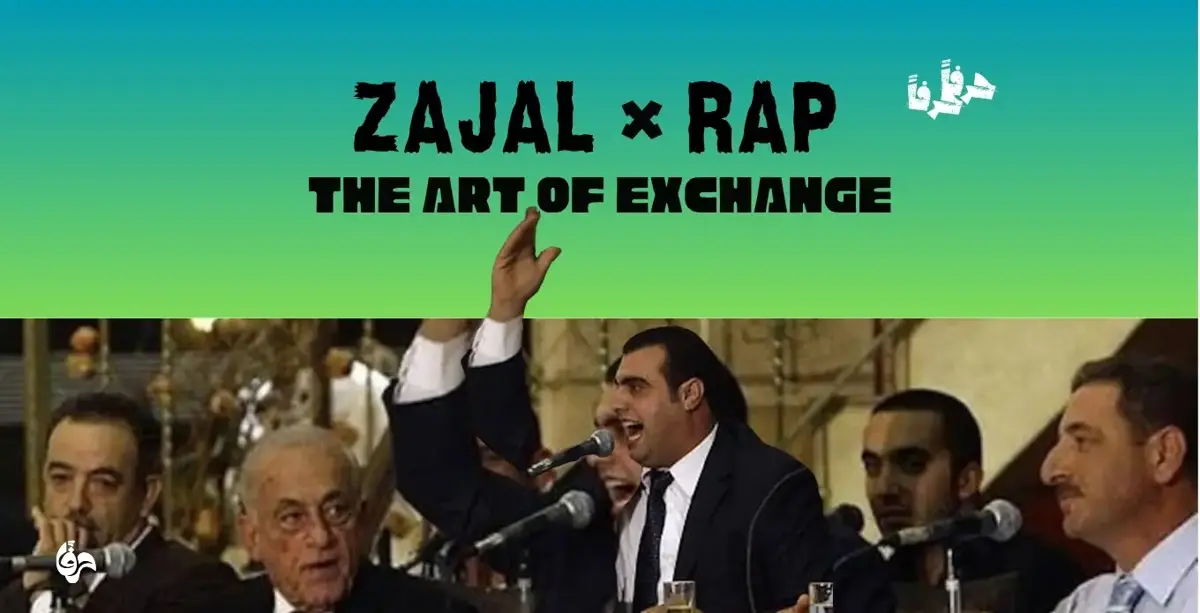
A long table. Suits and ties. Microphones set in front of the men seated behind it, and an audience filling the room around them. From a distance, it could be a political gathering, a public debate, a council in session.
It isn’t.
Behind those microphones sit Zein Shuaib, Zaghloul al-Damour, Talih Hamdan and Edouard Harb. Four poets using the microphone and the gathering as a platform for: zajal.
Zajal is sung or recited vernacular poetry, often built around exchanges where poets challenge and answer one another through rhyme.
Zein begins with a refrain:
وين الخيل تشد الحيل تجر ويل حوافرها نجوم
الليل بتاني ميل ببحر جبيل بسفرها
Then builds around the image of his horse:
حصاني صام بدون طعام برأي العام طلبتو لهون
عطيتو وسام هديتو لجام بريش نعام ١٢ لون ولما
حام على الأيام من الأيتام مليّت الكون والأخصام
بهالصمصام كوام كوام بصبرها
The rhyme lands inside the lines, not at the end of them صام، طعام، العام while the horse keeps collecting more: a medal, a bridle, ostrich feathers in twelve colours. The boast grows through the excess.
His turn ends and the refrain returns. The poets and audience repeat it together, tambourines carrying the rhythm until another voice takes over.
When Zaghloul al-Damour’s turn comes, he steps into the rhythm Zein has already set, holding onto its metre and rhyme while building an answer of his own. He starts by naming Zein:
زين دروس بهالقاموس وحاج مهووس على
المتراس وحدي اجلوس وليش مفقوس وإيدي
بوس وعلّي الراس عندي فلوس وكبر نفوس
وعالمنحوس بدق جراس بشفرة موس وبوج
عبوس هالتلت روس بكسرها
Zaghloul answers with even more punch: twelve rhymes on one syllable across four lines. He turns to Zein himself, sending him back to the dictionary and making him part of the verse.
And it keeps going. One turn leaves behind a word, a rhyme or an image for the next poet to pick up and turn into something of his own.
Decades later, at the first ARENA battle on the stairs of Mar Mikhael. Two rappers face each other at the bottom, with a crowd packed onto the steps behind them. There is shouting, movement, people leaning forward to see. Edd Abbas stands across from Dizaster and begins. The first sound could have come from the room we just left.
“Ouf. Ouf. Ouf.”
“Ouf.” the crowd answers.
Again.
This time, louder.
Then Edd sings, welcoming him by his name, Bachir:
يا بشير كونك جيتنا
تتمرجل على قرادينا
بيبقى علينا نرحب فيك
ونرجع نذكرك بتقاليدنا
Then, the delivery shifts into a rap flow:
لأن شكلك نسيت
أمثالك بينحطوا بمراحيضنا
هون يلي بيتمرجل من وقفو عالأربعة مثل الترابيزة
The zajal rhythm has given way to rap.
This isn’t a straight line from zajal to battle rap.
Their histories, rules, and sounds belong to different worlds. What links them here is the exchange itself: having someone there to answer, and something to answer back to.
In another battle, this time at Station Beirut, the exchange takes a different shape. It is less about hostility and more about compliments edged with playful sarcasm, turning the person across from them into material without needing the tension of a feud.
The Synaptik starts singing «سنة حلوة» to Darwish.
Except it’s The Synaptik’s birthday.
حتى بعيد ميلادي عم بحتفل فيك لما اجيت عالدنيا الدكتور عطى الـbaby لأمي اطّلعت علي وحكت: “shit هاد مش درويش”
The room breaks into laughter.
Later, Darwish answers with The Synaptik’s name inside his own verse:
كفّ الـSynaptik تخت
فبتطلع punchlineات مرتاحة
بس أوعى تغلط، الليث بطقّ الكف أستاذ
فبتطلع punchlineات مرتاحة
بس أوعى تغلط، الليث بطقّ الكف أستاذ
Zein enters Zaghloul’s verse. Dizaster is welcomed by name into Edd’s. The Synaptik appears in Darwish’s response. Each time, the person standing opposite becomes part of the performance.
The poet has to listen. So does the rapper. Not only to the person across from him, but to everyone around him. The crowd roars when a line stings, laughs when the turn is clever, and gives respect its moment when it’s earned. Whether the exchange is confrontational or playful, each response leaves something for the next person to work with, while the crowd decides what stays in the room. It keeps moving back and forth until it becomes difficult to separate what one person brought from what the other made of it.
They may have stepped into the room as two separate voices, whether to compete, provoke or simply play, but neither one could have made the performance alone. Whatever brought them face-to-face, they leave having built something together rather than torn each other apart.