 BACK TO NEWS
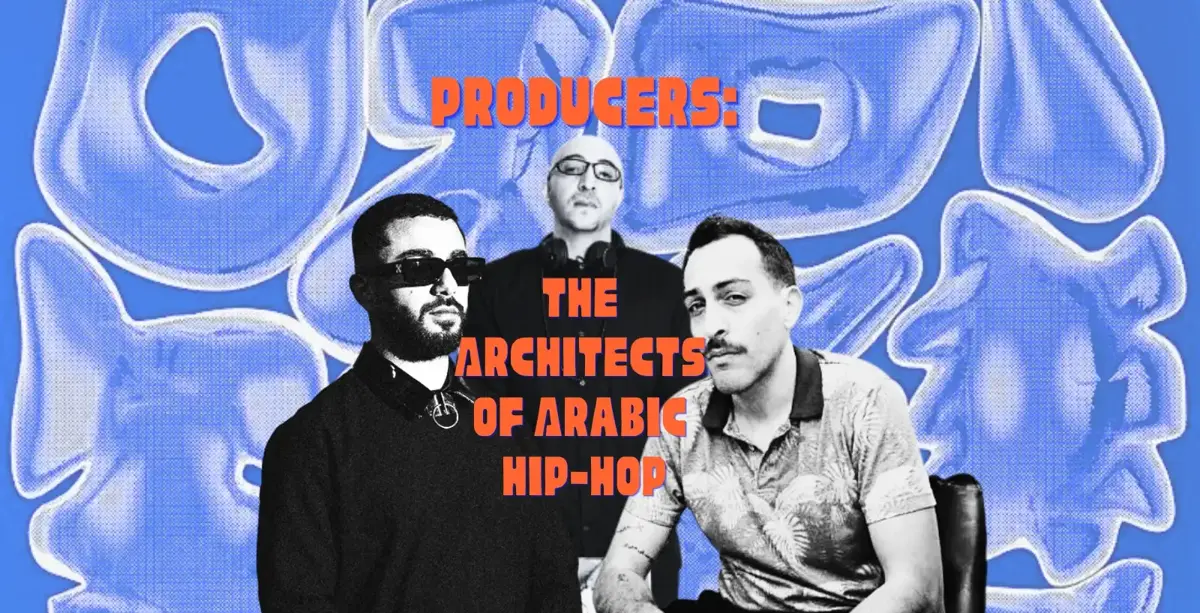
Producers have one of music’s least specific job descriptions, yet some of music’s most far-reaching responsibilities. The title stays the same even when the work doesn’t, and the same credit can describe fundamentally different kinds of work. Ask ten musicians what a producer does and you'll probably get ten different answers. The music is only part of what producers build.
To better understand what producers really do, we spoke with DJ Lethal Skillz and Yo Asel about the work that happens beyond the music itself.
Long before Lebanese hip-hop took shape, DJ Lethal Skillz was already investing in its future. Through 961 Underground, he helped give the scene somewhere to gather while it was still finding its footing. The same instinct runs through New World Disorder and Karmageddon, bringing together artists from across the Arab world and its diaspora at a time when a regional hip-hop scene was still difficult to imagine. Instead of waiting for someone else to tell that story, he turned the camera toward the scene himself through 961 Underground: The Birth of Lebanese Hip Hop. Most history is documented once it’s over. DJ Lethal Skillz documented a movement while it was still being written.
WERE NEW WORLD DISORDER, KARMAGEDDON AND 961 UNDERGROUND: THE BIRTH OF LEBANESE HIPHOP ALWAYS PART OF THE SAME VISION, OR IS THAT ONLY CLEAR IN HINDSIGHT?
“Looking back now, I realize it wasn't a series of separate projects, it was one long mission expressed through different forms.At the time, I wasn't thinking in terms like ecosystem building, cultural infrastructure, or legacy. I simply believed that if we didn't organize ourselves, document our stories, invest in our artists, and preserve our history, nobody else would do it for us.961 Underground was about bringing artists together beyond Lebanon's divisions of religion, sect, politics, and geography. Red Leb Studios gave people a place to create, collaborate, and learn. New World Disorder captured the voices of a generation. Karmageddon expanded those connections across the Arab world. 961 Underground: The Birth of Lebanese Hip-Hop became another step toward documenting a movement that deserved to be remembered.Looking back, I realize they were never separate projects; they were all different chapters of the same story. The medium changed a collective, a studio, a label, a documentary, regional collaborations but the mission remained the same: to build something bigger than myself that could outlive me.Hip-hop gave us a language to challenge division, connect communities, and tell our own stories on our own terms. That belief shaped every project I became part of, even before I consciously recognized the pattern myself.I've always believed that music creates moments, but culture is built by the people who preserve those moments for the next generation. Looking back now, I realize I wasn't just making music I was trying to help build and preserve a culture that deserved to be remembered.”
- DJLethalSkillz
Some of the biggest records almost never happen. ElGrandeToto nearly walked away from the beat that became Halla Halla. Yo Asel didn’t. He later recalled persuading Toto to give it a chance, and the song went on to become Toto’s first track to top YouTube Trending in Morocco. Success can make moments like these sound inevitable. They rarely are. Sometimes a producer’s most important contribution isn’t making a song, but refusing to let it disappear before it has the chance to become one. Before a record reaches the public, somebody usually has to fight for it.
HOW DO YOU KNOW WHEN TO TRUST YOUR INSTINCTS OVER AN ARTIST'S FIRST REACTION TO A RECORD?
“The story of Halla Halla started when Famillionaire was playing me a bunch of his ideas. As soon as he played Halla Halla, my first reaction was, “Give me this.” It had a different vibe, but the moment I heard that melody loop with the hook ref, I knew exactly what I wanted to do with it.I took the melody loop, tweaked it a little, added punchy drums, and kept Famillionaire’s topline reference. My vision was: I wanted to make a song for clubs and parties, something that would hit immediately and make the crowd go crazy. Back then, I’d never really heard Moroccan rap being played in clubs, so that was the whole idea behind it.The funny part is that when I first played the song to Toto, he wasn’t convinced. I kept telling him to just give it a try, and everyone else in the room was hyping it up because they loved the production. He eventually started recording it, but he still wasn’t completely sure about it.Looking back, Halla Halla is probably the song that turned out exactly the way I imagined in terms of its impact. It grew on people gradually in Morocco at first, but today it’s one of the most important songs in Toto’s live set. You see him performing it all over the world, and the crowd goes crazy every time, despite the language barrier.”
- Yo Asel
Listen to enough BLTNM releases and the connection becomes difficult to ignore. Different rappers, each with their own voice, writing and delivery, yet they all seem to belong to the same auditory space. Shabjdeed sounds nothing like Daboor. Both sound nothing like Fawzi. Yet nobody confuses a BLTNM record for anything outside BLTNM. The common thread sits behind them. Al Nather’s producer tag may be the easiest thing to recognize about one of his records, but it tells you the least about what he actually builds. His production has established a creative language that each of the label's artists speaks in their own way, allowing them to remain entirely themselves while still feeling like they came from the same place.
Maybe that's why "producer" has always felt like such an incomplete title. They're not just building records, they're the invisible architects of artists, sounds, and sometimes entire scenes.