 BACK TO NEWS
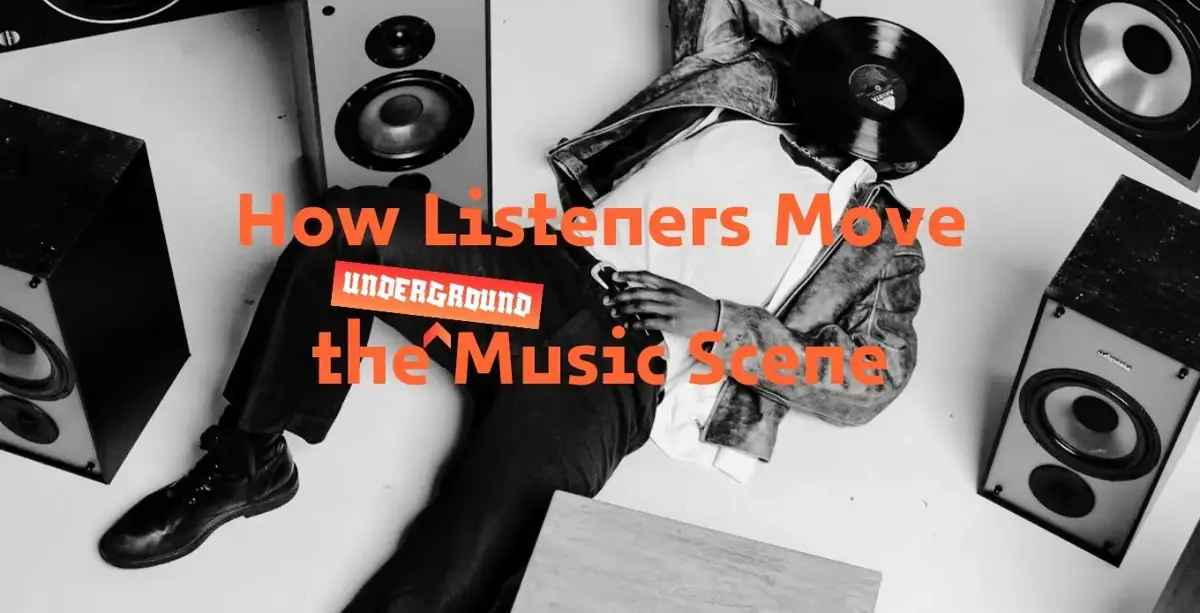
One of the most important roles the listener plays in shaping the underground music scene is meaning-making. Basically, it’s tuning into the music and making out of it what moves you, comforts you, or resonates with you. This concept alone tells us a lot about the role we play when we (really) listen to music.
Making meaning is not twisting or manipulating; it’s simply engaging and, therefore, demanding. It’s demanding more of what speaks to us on all these emotional levels. That’s what the passionate artist usually aims to deliver. At the end of the day, being generous enough to share your work with the world is akin to wearing your heart on your sleeve; and our response to this openness invites even more of it.
We play our part as listeners by doing more than just listening. We tune into the music, let it spark something in us, and before we know it, we’re compiling it in playlists, sharing it, talking about it, writing about it, and playing a part we don’t realize we’re playing. By doing this, we’re keeping the conversation going - not just between each other, but with the artist as well.
As social media has evolved to become what it is today, its negatives usually outweigh the positives - but not when it comes to this topic. Virtual spaces allowed music lovers an opportunity to propagate what they love and gather over it, creating communities that shape scenes as much as artists do. Harfan Harfan is one of those spaces, and it’s particularly contributing to the regional music scene through the aspect of meaning-making. Offering listeners a space to type out lyrics and annotate them, Harfan Harfan is not only a space for making meaning out of our words and music, but also a platform for us to ensure that they speak to a much wider audience. This is necessary at all times, but especially at times when our voices are being forcefully silenced.
Recently, during the escalation of the war on Lebanon, followers of the Harfan Harfan community were invited to share tracks they found themselves returning to. They submitted their responses through a few Instagram stories, and thus the playlist منكم مش منّا was curated. The tracklist ranges from the timeless sociopolitical satire of Ziad Rahbani and Sheikh Imam to modern revolutionary voices like Jaafar Touffar and Daboor.
In a time filled with noise and warring narratives, it’s only natural to return to what feels real. That’s why we write, read, talk, engage, and listen. In this context, listening isn’t passive. It’s a deliberate return to what’s ours. Every playlist, recommendation, annotation, and conversation helps carry the music further, keeping it alive long after the song ends.