 BACK TO NEWS
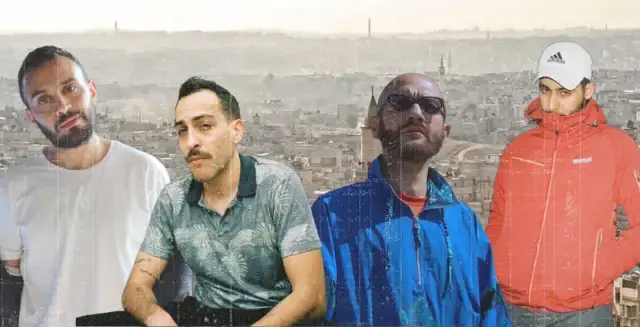
Music doesn’t require fluency. Even when lyrics are foreign, listeners connect before they feel the need for translation. Heads bop before they search for literal meaning. If this is true across continents, then how does music travel between neighboring countries that share a language, but speak it differently?
In the Levant, the distance felt between us and our neighbors is not imagined. It’s enforced by borders drawn to keep us estranged. Still, music crosses them easily and quickly, carried by streaming platforms and social media. In Arabic hip hop, dialects may shift and vocabularies may differ, but the experiences being rapped about remain familiar. Struggles, frustrations and humor are shared. Our nostalgia draws from a collective memory, our stories reveal how closely we’re related, and our slang distinguishes us from each other without disrupting our sense of what we share.
This is especially clear in how slang travels between scenes. In “القمر والمحيط,” The Synaptik repeatedly uses the word هسّا, a term used in Palestine, Iraq, and Jordan meaning “now” or “still.” For Lebanese listeners, the word lands easily against its near-identical counterpart,إسّا, carrying the same meaning with only a slight change in sound.
Hip hop may be a universal language, but it never comes from a neutral place. Rap is rooted in intention. Lyrics are written from a specific position, but they are always received personally. We rarely hear a bar without folding it into our own social, cultural, or political context. Nostalgia particularly accelerates this process. When El Far3i raps in “Rayga Rayga”: “عالويب عشبكة الكبار زي عنكبوت النونو,” the distance-breaking hook is عنكبوت النونو, a song that many of us grew up with. The reference doesn’t belong to one country, but rather to a shared childhood memory.
This is where the question of meaning shifts. As El Rass has reflected in conversation on Heidak El Podcast, what is often labeled “flow” in rap is not just technical skill, but a state that moves the rapper out of self-consciousness and into a state of heightened spiritual awareness of their surroundings. That awareness shapes how lyrics travel, allowing them to move more freely.
Satire signifies this movement clearly. In “2areek,” a track by El Rass, Al Nather, and Shabjdeed, El Rass asks “وش تبي؟” using the Gulf dialect in a moment of sarcastic submission. He follows it with “OPECنبي أرامكو و,” a phrase instantly understood across the region as a rejection of oil-led interests and false prophets.
Finally, collaboration becomes a statement in itself. In “فستق” by El Rass and Haykal, Haykal raps about Lebanon’s currency collapse. A Palestinian artist giving voice to a Lebanese crisis reflects a regional care that goes beyond geography. It’s a reminder that while our borders insist on separation, our music continues to speak across them, intentionally, attentively, and with meaning that shifts, but is never compromised.